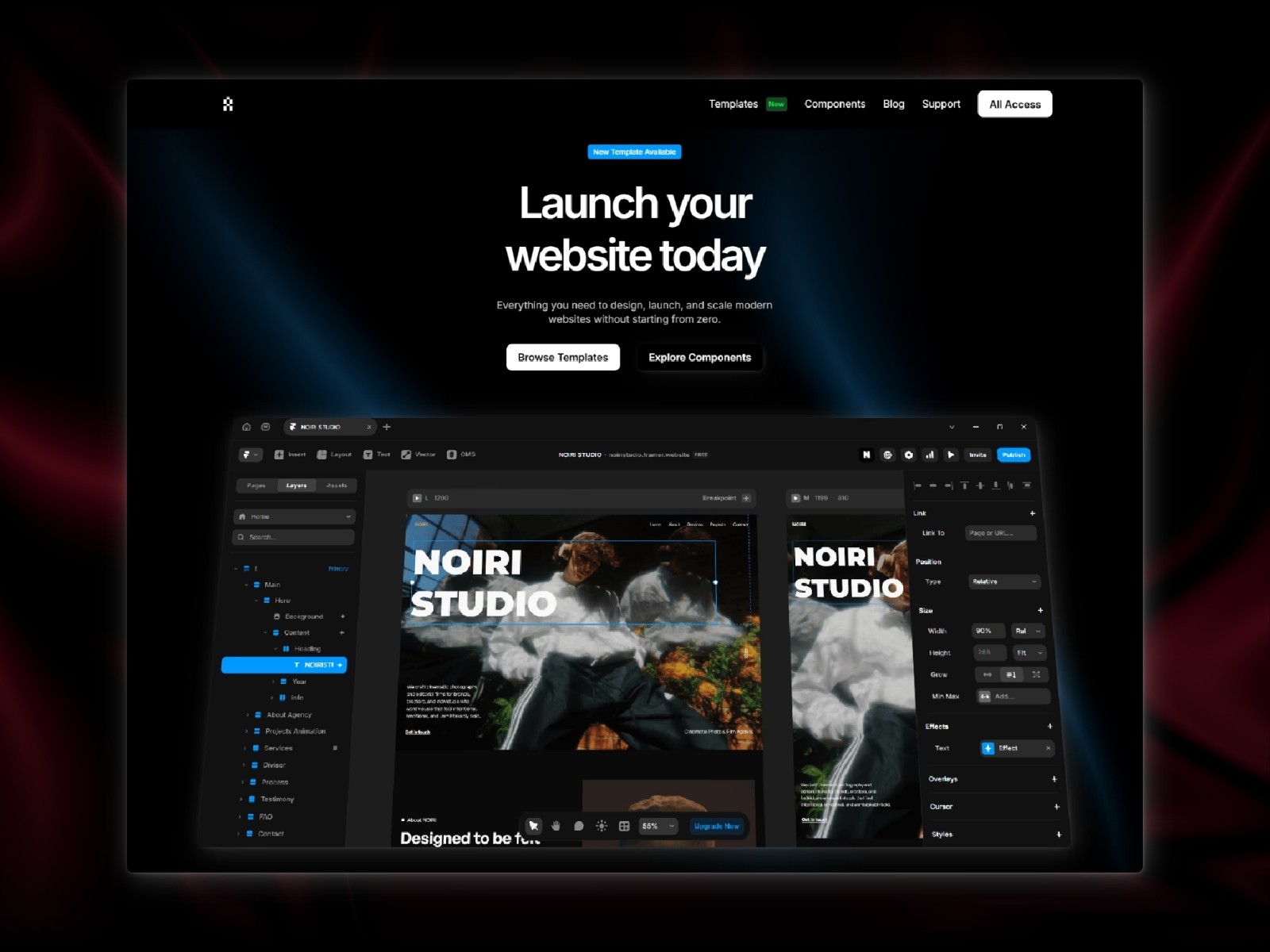
Framer Tips
How to Choose the Right Framer Template for Your Website

Choosing the right Framer template can save you a huge amount of time when building a new website. Instead of starting from scratch, a well-designed template gives you a strong foundation that you can customize to fit your brand, content, and goals.
The challenge is that not every template is built for the same purpose. Some are better for portfolios, some work better for agencies, and others are designed for personal brands, SaaS products, or landing pages.
Understanding what you need before choosing a template will help you avoid unnecessary changes later.
Why Templates Matter
A good template is more than just a visual starting point. It helps you launch faster, stay consistent, and focus on the content instead of rebuilding layouts from scratch.
Templates can also make it easier to keep your website organized, especially when they already include sections for navigation, testimonials, contact forms, blog content, FAQs, and calls to action.
Using a template can also help you avoid common design mistakes like inconsistent spacing, weak hierarchy, or layouts that do not work well on mobile devices.
Start with Your Website Goal
Before picking a template, think about the main goal of your website.
If you are building a portfolio, you may want something minimal that puts the focus on your work.
If you are building a website for a client or agency, you may need more service sections, case studies, testimonials, and pricing blocks.
For personal brands, it often makes sense to choose a layout that highlights your story, content, and social proof.
The more clearly you define your goal, the easier it becomes to choose a template that already fits what you need.
Consider the Content You Already Have
One of the most common mistakes people make is choosing a template before they know what content they actually need.
For example, a template with a large blog section may not make sense if you do not plan to publish articles.
A template with many case study sections may feel empty if you do not yet have enough projects to showcase.
Instead of forcing your content into the wrong structure, choose a template that naturally supports the content you already have.
Look at Mobile Responsiveness
A large part of your visitors will likely view your website from a phone or tablet.
Because of that, it is important to choose a Framer template that looks good across all screen sizes.
Pay attention to how navigation menus, text blocks, images, buttons, and spacing behave on mobile.
A template that looks great on desktop but feels broken on mobile can create a poor experience for visitors.
Think About Future Growth
Even if your website starts simple, it is helpful to choose a template that can grow with you.
You may want to add a blog, testimonials, pricing sections, FAQs, or new landing pages in the future.
Choosing a flexible template now can save you from having to redesign your website later.
Conclusion
The best Framer template is the one that fits your content, goals, and future plans.
Instead of focusing only on visual style, think about how the template will support your website over time.
A good template should help you launch faster, stay organized, and make it easier to create a better experience for your visitors.